

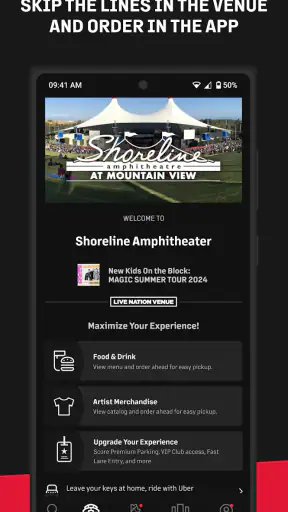
Live Nation At The Concert is a free music and audio app from Live Nation Worldwide, Inc. that I found most useful when I treated it as a practical bridge between discovering a live show and deciding whether I actually wanted to attend it. Its central appeal is simple: it brings live-music discovery and ticket access into the same place, rather than making me jump between an artist page, a venue calendar, a search engine, and a separate ticketing service.
That sounds like a small convenience, but it changes the way I plan a night out. Instead of beginning with a fixed artist name, I can start with the kind of evening I want and use the app to explore what is happening around me. I would not describe it as a replacement for every music service on my phone. It is not where I go for a deep listening library or carefully built playlists. Its value is more focused: helping turn interest in live music into a concrete plan.
The app has been available since June 20, 2012, and its current version is 11.0.0. It is rated for Everyone, works from Android 9 onward, and has passed the one-million-install mark. Those details make it feel like an established option rather than a short-lived event experiment. Its average score is 4.5 from around 25 thousand ratings, with roughly 7.4 thousand written reviews, so there is a substantial audience using it for the same basic purpose.
Discovering a concert without starting with a specific artist
The capability that matters most
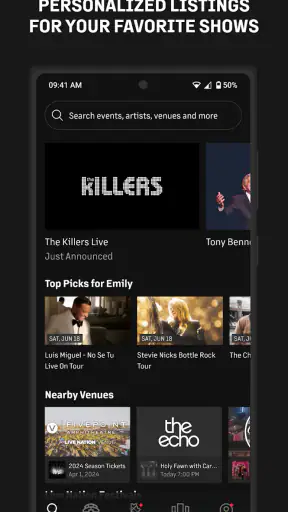
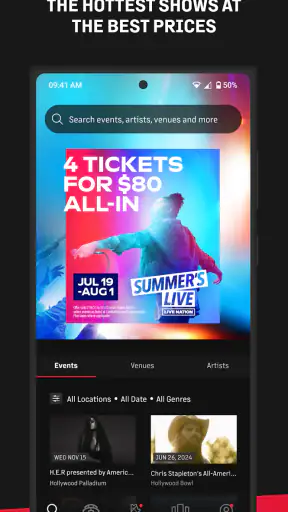
The strongest part of Live Nation At The Concert is the combination of live music discovery and ticket planning. In my experience, the important distinction is not merely that the app displays concerts. Plenty of venue pages and artist websites do that. The useful part is having discovery and the next practical step connected closely enough that I can move from “that sounds interesting” to “I know where to check the event” without rebuilding the search from scratch.
This is especially helpful when I know I want to go to a show but do not yet know which show. Traditional music apps are excellent at recommending recordings, but their recommendations usually stop at listening. General search tools can find events, although the results may mix old announcements, resale pages, venue information, and unrelated content. Live Nation At The Concert is more directly aligned with the question, “What live music could I realistically attend?”
I also like that the app’s purpose is easy to understand. It is not trying to be a full social network, a replacement music player, or a general entertainment portal. The focus stays close to concerts and tickets. That narrow purpose gives the experience a clearer rhythm: discover something, inspect the event, and decide whether to continue toward attendance.
One subtle benefit is that this approach can broaden my choices without making the search feel completely random. When I search by artist alone, I tend to repeat the same names. A concert-focused app encourages a different habit: look at what is available, then investigate the artists that fit the date, location, or mood. That is a better way to find a support act, a smaller name, or a genre I would not have searched for directly.
What the app changes in everyday planning
For me, the biggest effect is reduced planning friction. A concert is rarely just a music decision. I also need to think about the day, travel, companions, and whether the ticket process is worth the effort. By putting the discovery stage and ticket stage close together, the app helps me make that decision while the event is still in context.
Imagine a normal Thursday afternoon. I am free on Saturday, want to do something outside the house, and remember that I have not checked upcoming shows. I can open the app, browse the available live-music options, look for an event that fits the evening, and decide whether it deserves more attention. If I find a promising concert, I can continue through the ticket path while the details are fresh instead of saving a vague note and forgetting about it.
That workflow is more useful than it first appears. Many event searches fail because the person has to remember the artist name, locate the official page, find the correct date, and then repeat the process later when they are ready to buy. Keeping those steps together makes spontaneous plans more realistic. It does not remove every decision, but it removes enough small obstacles to make action more likely.
My practical tip is to use it before you have made up your mind. If I open it only after choosing an artist and venue, I am using a small part of its value. I get more from it when I browse first, compare the possibilities, and let the available events shape the plan. That is where it differs from simply searching the web for a concert I already know I want.
How the experience works when a concert becomes a real plan
From discovery to a ticket decision
The app works best as a sequence rather than as a place to linger. I begin by looking for a live event that fits my interests and practical limits. Once something catches my attention, I treat the event information as a decision screen: Is the date workable? Is the location realistic? Does the artist justify the trip? Am I ready to move toward tickets, or should I keep browsing?
This matters because the best concert-discovery tools are not necessarily the ones with the most content. They are the ones that make the next decision obvious. Live Nation At The Concert earns its place on my phone when it helps me answer those questions without forcing me to switch between several unrelated sources.
There is also a useful psychological difference between browsing recordings and browsing shows. A music-streaming app can keep offering songs indefinitely, which is perfect for listening but not always helpful when I want to make a plan. A concert app gives the search a real-world endpoint. I am not only asking whether I like an artist; I am deciding whether I want to be in a particular place for a particular event.
When I find a show I might attend, I would still slow down before committing. I check the event details carefully, confirm that the date and venue suit me, and consider the total outing rather than focusing only on the excitement of the artist. The app can make discovery and ticket access more convenient, but it cannot make an inconvenient journey convenient or turn an unsuitable date into a good one.
Why the ticket connection is more important than it looks
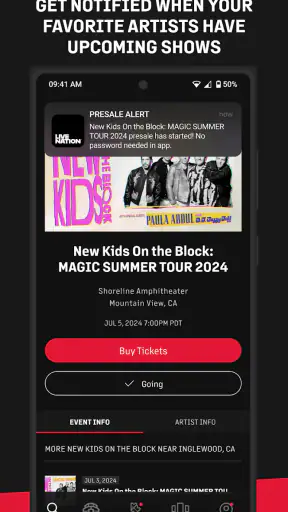
Ticket access is not just an extra button attached to a concert listing. It changes the usefulness of discovery. Without a practical route forward, event browsing can become entertainment in itself: I collect ideas but never act on them. The connection to tickets gives each promising result a clear next step.
That is particularly valuable for people who make decisions quickly. If I see a concert while discussing weekend plans with a friend, I can investigate it immediately instead of saying I will look it up later. A few minutes can be the difference between a shared plan and a forgotten possibility. The app is therefore more useful in moments of active planning than during passive browsing.
At the same time, I would not rely on the app as my only source of context. A venue’s own information may be better for practical questions about entry arrangements, accessibility, or house rules. An artist’s official channels may be better for tour announcements and personal updates. The app’s strength is the event-to-ticket path, not necessarily every detail surrounding the night.
This is one of the most important trade-offs for new users. Live Nation At The Concert can simplify the route to a ticket, but convenience should not replace checking the information that matters to your particular situation. I use it as the starting point and transaction path, then verify any venue-specific detail that could affect the experience.
A workflow that saves time
My preferred workflow is to browse with a purpose, shortlist only a few realistic events, and then make a decision instead of endlessly scrolling. I first consider the date and travel distance, then the artist, and only afterward the ticket step. This order prevents the excitement of a familiar name from making me ignore an impractical schedule.
Another useful habit is to browse when I am planning with other people present. The app becomes more valuable when the group can look at options together and decide immediately. It is less effective if I am using it as a private collection of possibilities with no intention of choosing one. The tool supports decisions; it does not create motivation on its own.
I also recommend separating discovery from commitment by a few minutes. A concert listing can feel attractive simply because it appears at the right moment. I take a second look at the event details before moving toward tickets. That small pause is a good balance between the app’s speed and the need to make a sensible purchase.
The best scenario: turning an open weekend into a concert night
Who gets the clearest benefit
The ideal user is someone who enjoys live music but does not follow every tour closely. If I already know the exact artist, venue, and date, the app may only save a little time. If I simply know that I want to attend something good, it becomes much more useful because it gives that vague intention a practical shape.
Consider a person who has a free weekend, wants to go out with a friend, and listens across several genres. They may not have a single favorite artist in mind. Opening a standard streaming app will produce songs, not necessarily a night out. Searching the wider web may produce too many disconnected results. A concert-focused app can narrow the search around live events and make the ticket question part of the same conversation.
This also suits people who discover artists through the event itself. A lineup or concert listing can introduce a name that would never appear in a personal listening rotation. That is a different kind of discovery: instead of asking an algorithm to predict what I will play, I am choosing whether a live setting sounds worth experiencing. For adventurous listeners, that can be more rewarding than another playlist recommendation.
It is also practical for a friend group with different tastes. Rather than arguing over one artist from the beginning, everyone can look at available events and identify an option that works for the group. The app does not solve disagreements, but it gives the discussion something concrete: a real show, a real date, and a real route toward tickets.
When it is not the right tool
I would skip this app if my main goal is listening to music on demand. A dedicated streaming service is better for albums, mixes, offline playback, and everyday audio habits. Live Nation At The Concert is about getting to a performance, not replacing the music player I already use.
I would also look elsewhere if I care primarily about a very small local scene that is not represented through the app’s event focus. In that case, independent venue calendars, local promoters, or artist pages may reveal more. A broad concert platform is convenient, but local sources can be more personal and sometimes more complete for niche events.
It may also be unnecessary for someone who always buys directly from a trusted venue and already has a reliable routine. If that routine is quick and gives all the information needed, adding another app may not improve much. The strongest reason to install this one is not loyalty to a particular ticket route; it is the desire to discover and act on live-music options in one focused experience.
The trade-offs behind a smoother concert search
Convenience versus deeper context
The central trade-off is straightforward: the app makes finding and pursuing a concert easier, but a streamlined path can encourage me to make a decision before I have considered every practical detail. The experience is strongest when I use it for discovery and ticket access while keeping my own judgment in charge.
I do not see that as a flaw unique to this app. It is simply the cost of making a process feel quick. The fewer steps between an appealing event and the ticket stage, the more important it becomes to pause and check whether the show actually fits my plans. I prefer this kind of friction to the opposite problem, where useful events are buried across disconnected pages, but I still treat the final decision carefully.
Another limitation is that a concert listing can make an event look equally relevant to everyone, even though people have very different travel limits and budgets. I have to apply my own filters. The app can help me find the opportunity, but I remain responsible for deciding whether the whole evening makes sense.
Comparing it with the usual alternatives
Compared with a general search engine, Live Nation At The Concert feels more focused. A web search is flexible and can uncover venue pages, news, and local announcements, but it often makes me assemble the answer myself. The app is preferable when I want a concert-oriented path rather than a broad collection of links and results.
Compared with a music-streaming service, the difference is even clearer. Streaming is built around listening history and audio playback. This app is built around the possibility of attending. I would use streaming to decide whether I like an artist’s recordings, then use the concert app to explore whether there is a live opportunity worth pursuing.
Compared with a venue’s own calendar, the app can be more convenient for discovering beyond one location. The venue calendar wins when I already know where I want to go or need highly specific house information. The app wins when I am flexible about the venue and want to explore live options more broadly.
Compared with buying directly from an artist’s official page, the choice depends on the starting point. An artist page is ideal when I am following one performer closely. Live Nation At The Concert is more useful when I am beginning with the desire to attend a show rather than with a single artist. Neither approach replaces the other; they serve different moments in the planning process.
Small habits that improve the experience
I get better results when I decide my practical boundaries before browsing. I think about how far I am willing to travel, which days are possible, and whether I am looking for a familiar artist or an unexpected discovery. Without those boundaries, browsing can become a long list of tempting events that I would never realistically attend.
I also avoid treating the first interesting result as the best result. The app is most valuable when I use its discovery role to compare possibilities. A less famous artist on a more convenient evening may produce a better experience than a major name that requires complicated travel. That is a judgment the app can support, but not make for me.
Finally, I keep the ticket stage separate from the emotional reaction to the artist. I ask whether the event works for the group, the schedule, and the journey. This sounds obvious, but the app’s smooth movement from discovery toward tickets makes that reminder worthwhile. The best use of the app is fast discovery followed by deliberate commitment.
Who gains the most from this focused music app
A strong fit for occasional concert-goers
I would recommend Live Nation At The Concert to occasional concert-goers, flexible music fans, and people who often say, “We should go to a show sometime,” but rarely turn that idea into a plan. Its value is not that it teaches someone how live events work. Its value is that it makes the first practical step easier.
It is also a good fit for people who enjoy browsing by opportunity. If I am open to different artists, venues, or styles, I can use the app to make live music part of my regular weekend planning. The free price removes an obvious barrier to trying it, while the Everyone age rating makes it broadly approachable for families and mixed-age households using compatible devices.
The app’s long availability and current version suggest an experience that has continued to receive attention, while the one-million-plus install base means it is not an obscure experiment. I would still judge it by my own concert habits rather than by popularity. Someone who attends only one artist’s shows may prefer that artist’s direct channel, while someone who wants broad discovery is more likely to benefit here.
What I would expect before installing
I would install it with a clear expectation: this is a focused companion for finding live music and moving toward tickets. I would not expect it to replace my streaming subscription, provide every piece of venue guidance, or decide which concert is right for my group. Knowing that boundary makes the app feel more useful because I am judging it against the job it is designed to do.
The minimum operating-system requirement of Android 9 or newer is also worth checking before installation. For anyone on a compatible device, the free entry point makes a trial easy. I would open it during a real planning moment rather than downloading it just to browse once, because its strengths become clearer when I have an actual date, friend, or weekend in mind.
My final view is positive, with a specific reason: Live Nation At The Concert reduces the distance between discovering a live event and doing something about it. That is a meaningful advantage over ordinary music apps and a more focused alternative to scattered web searches. It is not the right choice for deep audio listening or highly specialized local research, but for people who want to turn an open evening into a concert plan, I think it is worth keeping available.
Live Nation At The Concert works best when I use it as a starting point for real-world decisions: browse widely, shortlist realistically, check the details, and then decide whether the ticket makes sense. Used that way, it feels less like another entertainment app and more like a practical tool for making live music happen.


